Very interesting piece by Torsten Bell, chief executive of the Resolution Foundation, on why Britain’s older electorate can live with low GDP (partly drawing on my Nuffield working paper on ageing and the economy)
Category: Uncategorized
How Russia’s invasion of Ukraine has changed public opinion in Europe
The war between Russia and Ukraine has had a major impact on European politics, but how has it affected public opinion? Using data from the European Social Survey, Margaryta Klymak and I find in a recent LSE blog that the war has increased trust in politics in Europe, strengthened support for democracy and freedom, and fostered positive views of immigration and redistribution.
Continue reading “How Russia’s invasion of Ukraine has changed public opinion in Europe”New article on ‘Partisan Pandemic in UK’ just accepted at the European Journal of Political Research
Our research note (joint with M. Klymak) entitled “Partisan Pandemic in the UK: Individual views and mobility during Covid-19“ has just been accepted at the European Journal of Political Research.
The article asks what is the association between partisanship and individual views as well as behaviours towards the Covid-19 pandemic? We explore how and why there might be differences between distinct voter groups. The article addresses this question empirically using two datasets collected before and during pandemic: a daily survey covering nearly 100,000 individuals and county level mobility matched to UK 2019 general election results.
Our findings show that partisanship is strongly correlated with differences in both individual views and behaviours. Conservative voters were less likely to perceive Covid-19 as dangerous and to stay home during the national lockdown. The effect of the national lockdown on mobility was negative and statistically significant only in less Conservative counties.
Thus, partisanship is associated with pandemic-related individual views and behaviours even when there is broad consensus among main political parties and the government about nature of public health problem and appropriate solution to the pandemic.
Second review of “Foreign States in Domestic Markets”
Professor Moravcsik has just published in Foreign affairs the second review of my recent book Foreign States in Domestic Markets (joint with Professor Mark Thatcher and published with Oxford University Press).
It provides a succinct summary of the book and is generous in its overall assessment:
“The four case studies in this book offer basic data and succinct analysis of recent policies on this issue—which is sure to loom large as Western democracies ponder how to respond to the rising geoeconomic power of their global competitors.”
Moravcsik, A. (2022) Book review of ‘Foreign States in Domestic Markets: Sovereign Wealth Funds and the West” By Mark Thatcher and Tim Vlandas Oxford University Press, USA, 2022.’ Foreign Affairs, November/December 2022.
Paper on Partisanship and Covid-19 vaccination accepted at Scientific Reports
My latest paper on Partisanship and Covid-19 vaccination in the UK (joint with Margaryta Klymak) was accepted at Scientific Reports (Nature Portfolio).
The article examines the association between partisanship and vaccination in the UK. In existing literature, the lower vaccination rates among Republicans in the US have been linked to ideology and President Trump’s anti-vaccination rhetoric. But we do not know whether this also applies to the UK, where both ruling and opposition parties have promoted the national vaccination program.
Using two datasets at constituency and individual levels, we analyse whether there are partisan differences in uptake when vaccination garners cross-party support. Our findings contrast in important ways from the US case.
First, the correlation between partisanship and vaccination is the opposite to that of the US: both Conservative constituencies and individuals are associated with higher vaccination rates than Labour across almost all age groups. Thus, right-wing individuals do not necessarily vaccinate less, at least when their political party is in power and supportive of vaccination.
Second, partisanship alone accounts for a large share of variation in vaccination rates, but this association appears largely driven by socio-economic and demographic differences: older and economically better off individuals and constituencies tend to be more vaccinated. Once these controls are included, the correlation between Conservative partisanship and vaccination shrinks substantially. Hence, the ideological source of the partisan gap in vaccination rates appears smaller than in the US
Understanding right-wing populism and what to do about it
ETUI-FES joint event
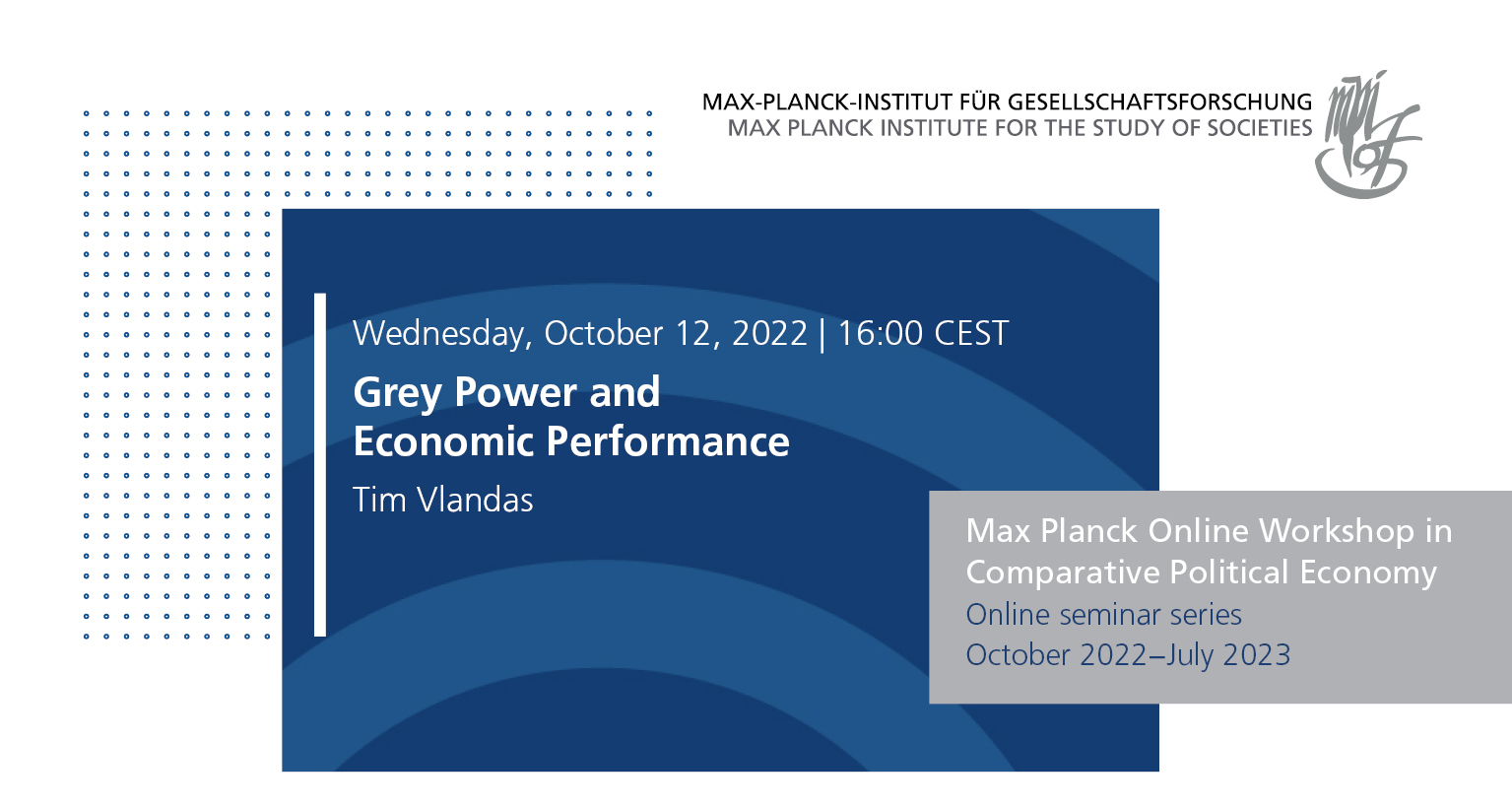
Three upcoming talks on 11, 12 and 13 October 2022


New article on welfare state & environmental action in Journal of European Social Policy
Available in open access

ETUI-FES event in BXL 13 October 2022

 Tim Vlandas
You must be logged in to post a comment.