An interesting new HM Treasury report cites our research on estimating the extent and sources of model uncertainty in Political Science, recently published by PNAS.
Category: Uncategorized
The Atlantic cites my research on ageing
Idrees Kahloon has just published an insightful piece on ageing in the Atlantic
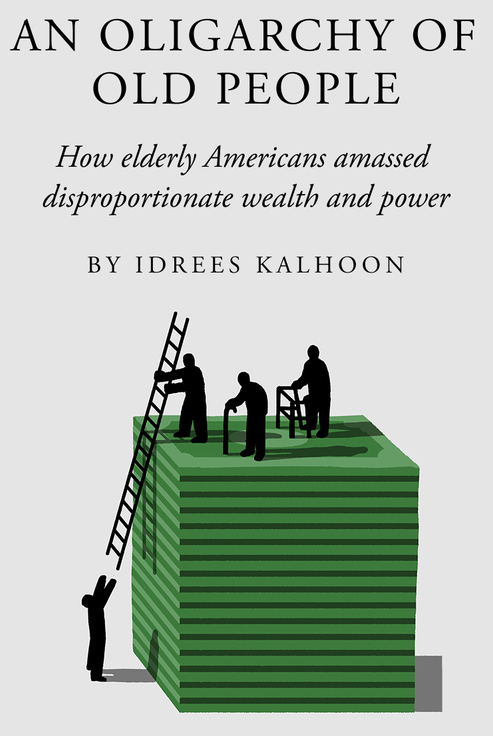
In which he also cites some of my work:
“According to Tim Vlandas, an Oxford political economist, advanced democracies around the world are reaching the point of “gerontonomia”—his term for a stagnating political economy set up to prioritize elderly citizens. These citizens punish their elected governments for inflation, which lessens the value of savings and pension payments. They are much more tolerant of unemployment, because they no longer work; slow growth, because their wealth has already accumulated; and high public debt, because their descendants will pay it. The result, Vlandas argues, is lower wage growth for those still working, and also worse outcomes for their children, as a result of lower social investment over the course of their lives.”
Continue reading “The Atlantic cites my research on ageing”Volkstrant article cites my research on ageing
A recent Volkstrant article has cited my work on the political economy consequences of ageing (my own translation):
“Oxford economist Tim Vlandas calls it a “gerontonomy”: an economy in the service of the elderly. The growing electoral power of pensioners, who vote more faithfully than working people, leads to democratically chosen stagnation, Vlandas argues, because the interests of the elderly prevail over long-term investment out of political fear.”
New article on the atomistic fallacy just accepted in the European Journal of Political Research
Our new article (joint with Daphne Halikiopoulou) on the (forgotten) atomistic fallacy in Political Science and its implications for how we interpret elections was just accepted in the European Journal of Political Research.
Improvements in the availability, accuracy and processing of individual level data have allowed political science literature to address the ‘ecological fallacy’, whereby inferences are made about individuals based on units of analyses operating at a higher level.
Yet, we argue that there has been limited attention to the risk that individual-level analyses may suffer from the reverse ‘atomistic’-or ‘individualistic’-fallacy: the erroneous practice of drawing inferences about national level outcomes based on individual-level analyses.
In this research note, we present a mathematical statement and simulations to diagnose and evaluate the extent of this fallacy in the case of voting behaviour. We also illustrate the problem using European Social Survey (ESS) data on far-right voting.
We conclude by identifying three ‘perils’ of the atomistic fallacy, related to extrapolating conclusions about a party’s overall performance from information about an individual’s voting propensity. These perils can significantly affect how researchers interpret election results, and in turn, the policy implications of political science research.
My article on Aging Advanced Capitalist Democracies now out in World Politics
My article on Aging Advanced Capitalist Democracies has just been published by World Politics.
Continue reading “My article on Aging Advanced Capitalist Democracies now out in World Politics”Sina news mentions my research
Sina news, one of China’s largest and most influential online financial news and data platforms, has recently cited my research:
“Tim Vlandas, Professor of Comparative Political Economy and Social Policy at Oxford University, points out that as the proportion of older voters rises, politicians have less direct electoral incentive to pursue long-term economic growth strategies. Safeguarding the interests of retirees is seen as safer than investing in green transitions, education, or childcare. This creates a vicious cycle: declining birth rates and a growing disinterest among young people in a political arena that fails to meet their own needs. Meanwhile, pensions are becoming increasingly difficult to fund, yet are becoming more crucial for retired voters.” (google translated from Chinese)
The full source in Chinese is here: https://finance.sina.com.cn/roll/2025-12-05/doc-infztcen7887280.shtml
Recent Vox article cites my research on ageing
Great to see my research on the political economy of ageing cited in a recent vox article exploring the impact of America’s ageing population on economic policy and growth. A more extensive version of my argument that ageing changes the electoral politics of economic stagnation is forthcoming in World Politics.
EBRD report mentions my research on ageing
The EBRD has just published an interesting report on demographic change. There is a very good chapter on the political economy of demographic change where they build on my research to argue that addressing the challenges that ageing creates is complicated by the different policy priorities of different age groups.
Continue reading “EBRD report mentions my research on ageing”Bloomberg article mentions my research on ageing
A recent Bloomberg article “Untouchable Baby Boomers Have Europe in a Choke Hold” mentions my research on the political economy of ageing, which I discussed in a recent LSE blog.
You can read the underlying research, which is forthcoming in World Politics, on ResearchGate.
Guardian article mentions my research on welfare state and far right party support
A recent Guardian article “Welfare cuts have fuelled rise of far right and populism” mentions my research on how welfare state policies shape far right party support among insecure individuals.
Continue reading “Guardian article mentions my research on welfare state and far right party support” Tim Vlandas
You must be logged in to post a comment.